

PM Mudra Loan Apply Online: Complete Guide for Business Owners
Looking to start or expand your business? Learn how to apply for the PM Mudra Loan online. Explore eligibility, interest rates, and a step-by-step application guide.
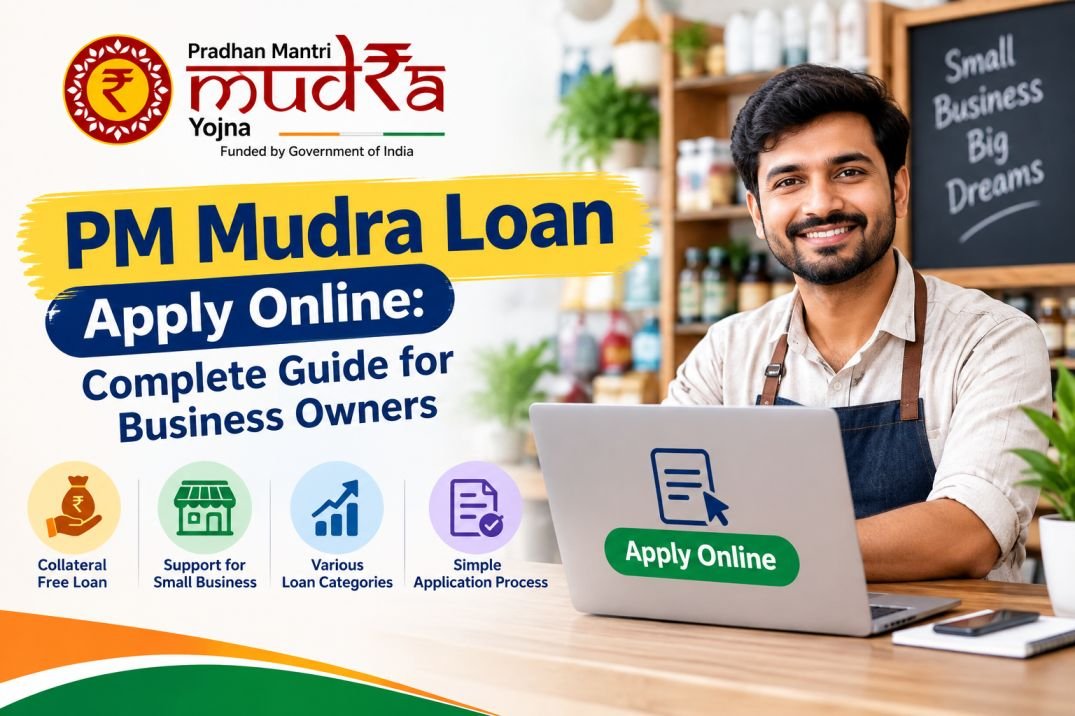
Table of Contents
- 1. What is the PM Mudra Loan and How Does It Work?
- 2. Exploring the Three Categories of Mudra Yojana
- 3. Who is Eligible for the Pradhan Mantri Mudra Loan?
- 4. Required Documents for a Successful Application
- 5. Step-by-Step Guide to PM Mudra Loan Apply Online
- 6. Understanding Interest Rates and Processing Fees
- 7. How to Use the Sanctioned Amount for Your Business
- 8. Common Mistakes to Avoid During the Application Process
- 9. Top Benefits of Choosing this Government Initiative
- 10. Frequently Asked Questions Before You Hit Submit
-
1. What is the PM Mudra Loan and How Does It Work?
Starting a small business or keeping an existing one afloat often comes down to one major hurdle: funding. This is exactly where the Pradhan Mantri Mudra Yojana steps in. Launched by the Government of India, this initiative aims to provide financial support to micro and small enterprises that typically struggle to get bank approvals. The best part? You do not need to provide any collateral or pledge your personal assets to secure this funding. It acts as a financial bridge for shopkeepers, artisans, and small manufacturers who want to scale their operations but lack the initial capital. This scheme empowers ordinary people to become job creators rather than just job seekers, fostering grassroots economic growth across the country.
Real-life Example: Imagine a local baker named Rahul who wants to buy a new industrial oven to double his daily bread production. He does not own a house to offer as a guarantee to the bank. Through this government scheme, Rahul can approach a participating lender, show his business plan, and secure the necessary funds without risking his family's savings.
-
2. Exploring the Three Categories of Mudra Yojana
The government understands that a street vendor and a small IT firm have completely different financial needs. To address this, the funding is cleverly divided into three distinct categories: Shishu, Kishore, and Tarun. Shishu offers amounts up to ₹50,000, perfect for someone just setting up a tiny venture. Kishore covers amounts from ₹50,001 to ₹5,00,000, tailored for businesses that have already started but need a push to expand. Finally, Tarun provides capital from ₹5,00,001 up to ₹10,00,000 for well-established small enterprises ready for significant scaling. By categorizing the limits, banks can process requests faster and ensure the right amount reaches the right stage of business development.
Real-life Example: Let us look at how this works practically. Anita wants to start a small tailoring shop from her home; she would apply under the Shishu category to buy her first sewing machine. On the other hand, a cafe owner who has been running successfully for two years and wants to open a second branch would look at the Kishore category to fund the new interior setup.
-
3. Who is Eligible for the Pradhan Mantri Mudra Loan?
Figuring out if you qualify for this financial aid is surprisingly straightforward. The primary rule is that your enterprise must be non-corporate and non-farm based. This means large corporations or traditional crop farmers cannot apply. However, if you are a sole proprietor, run a partnership firm, or operate a small manufacturing unit, you are in luck. Service sector units, local shopkeepers, fruit and vegetable vendors, and even commercial vehicle operators are completely eligible. You must also have a clean banking history, meaning you should not have defaulted on any previous debts from financial institutions.
Real-life Example: Consider a graphic designer working as a freelancer who wants to set up a formal design studio. Since this falls under the service sector, the designer is fully eligible. Conversely, a farmer looking to buy a tractor would not qualify here, as agricultural needs have entirely separate government programs. The focus remains strictly on empowering small-scale commerce and trading.
-
4. Required Documents for a Successful Application
Gathering the right paperwork is often the most stressful part of borrowing money, but this initiative keeps the requirements relatively simple. You will need standard KYC paperwork, which includes proof of identity like an Aadhaar card or Voter ID, and proof of address. Beyond that, the bank needs to verify your commercial existence. You should prepare your business registration certificates, trade licenses, or any official document validating your enterprise. Additionally, providing recent bank statements and a clear project report detailing how you plan to use the money is crucial for faster approval.
Real-life Example: When a boutique owner decides to apply, she packs a folder with her Aadhaar card, her shop's municipal license, and her bank statements from the last six months. More importantly, she includes a one-page plan showing that the ₹2,00,000 will be spent on bulk fabric purchases ahead of the festive season. Providing this documented intent gives the bank confidence in her strategy.
-
5. Step-by-Step Guide to PM Mudra Loan Apply Online
Gone are the days when you had to stand in endless queues at the branch office to request funding. The online application process is designed for modern convenience. You start by visiting the official Udyamimitra portal, which handles these requests digitally. After registering with your mobile number and email, you navigate to the application section. Here, you fill in your personal details, commercial information, and select the exact category you are aiming for. Once the digital form is complete, you upload the scanned copies of your required documents and route the application to your preferred lender.
Real-life Example: Imagine you run a small pottery business and need funds urgently. Instead of closing your shop to visit banks, you sit at your laptop after dinner, log into the Udyamimitra website, and select the branch near your house as the preferred lender. You upload your identity proofs and a PDF of your equipment quotation. The entire initial legwork happens right from your living room.
-
6. Understanding Interest Rates and Processing Fees
One of the biggest concerns for any borrower is the overall cost of borrowing. Unlike fixed-rate personal loans, there is no single standard interest rate across the board. The rates fluctuate based on the specific bank's internal policies, your personal credit history, and the category chosen. However, because the Reserve Bank of India guides this framework, the rates are generally much more affordable than typical commercial options or credit cards. Furthermore, one of the most attractive features is the processing fee structure. For the Shishu category, lenders usually waive the processing fee entirely, making it highly accessible for absolute beginners.
Real-life Example: Let us say a mobile repair technician borrows ₹40,000 to buy testing equipment. He pays zero processing fees, instantly saving money upfront. The bank might charge him an interest rate around 9% to 11% annually. In contrast, if a larger hardware store asks for ₹9,00,000, the bank might charge a nominal processing fee of 0.50% along with a slightly adjusted interest rate based on their risk assessment.
-
7. How to Use the Sanctioned Amount for Your Business
Securing the funds is a great achievement, but using them correctly dictates the future success of your daily operations. The government provides this money specifically for income-generating activities. You can utilize the capital for purchasing raw materials, upgrading your machinery, managing daily working capital, or even expanding your current workspace. Lenders typically issue a specialized RuPay debit card, known as the Mudra Card, which allows you to withdraw cash for daily business expenses or make direct point-of-sale purchases. This smart feature ensures the new funds remain entirely segregated from your personal finances.
Real-life Example: Consider a food truck operator who receives a ₹3,00,000 sanction. Instead of withdrawing the entire amount in cash, she uses her designated card to pay the wholesale grocery supplier directly every Monday. She also transfers a portion straight to an equipment vendor to upgrade her fryers. If she were to use that money to pay off a personal credit card bill, it would violate the agreement terms.
-
8. Common Mistakes to Avoid During the Application Process
Even though the system is simplified, many applicants face rejections due to completely avoidable errors. The most frequent mistake is asking for an unrealistic amount without a solid plan to back it up. If your annual turnover is ₹2,00,000 and you apply for a ₹10,00,000 limit right away, rejection is almost certain. Another major pitfall is ignoring your CIBIL score. While collateral is not needed, a terrible credit history showing defaults will disqualify you quickly. Lastly, submitting mismatched documents, like a different address on your trade license versus your Aadhaar, causes frustrating delays.
Real-life Example: An aspiring gym owner applied for ₹8,00,000 but only submitted a vague two-line summary of his idea. The bank rejected him immediately. A few months later, he reapplied with a detailed breakdown showing equipment costs, expected monthly memberships, and marketing expenses. This time, his clarity gave the manager confidence, and the file was approved without any hassle.
-
9. Top Benefits of Choosing this Government Initiative
Choosing this specific funding route offers distinct advantages that traditional private lending simply cannot match. The absolute biggest draw is the lack of collateral requirement. You do not have to mortgage your family home or put up gold to get capital. This democratizes opportunities for millions of middle-class entrepreneurs. Additionally, women entrepreneurs often receive special concessions, such as slightly lower interest rates, to encourage female participation in the economy. The flexible repayment tenure, usually stretching from one to five years, also ensures that monthly installments do not choke your cash flow during the early growth stages.
Real-life Example: A group of women in a rural area wanted to start a pickle manufacturing unit. Approaching private moneylenders would have meant paying exorbitant daily interest rates. By opting for the government scheme, they secured a discounted interest rate tailored for female owners. The five-year repayment window gave them enough breathing room to establish their brand locally before the EMI pressure set in.
-
10. Frequently Asked Questions Before You Hit Submit
Before finalizing your digital application, it is completely normal to have a few lingering doubts. People often wonder if they can apply for a second time if they have successfully repaid the first one. The answer is yes; demonstrating good repayment behavior makes it easier to upgrade to a higher category later on. Another common question is whether a PAN card is strictly mandatory. While it is highly recommended and makes KYC significantly faster, some local banks may process small requests without it, relying on alternative identity proofs. Always clarify these minor details directly with your chosen bank.
Real-life Example: A carpenter who borrowed ₹40,000 two years ago managed to clear all his dues perfectly on time. His business grew, and he wondered if he was now locked out of the system. He approached the bank and was thrilled to learn that his excellent track record actually pre-qualified him for a ₹2,00,000 limit to buy automated woodworking machines, ensuring his continuous growth.

My main purpose in writing these posts is simply to help you. All the information shared here is carefully put together just to be useful for your daily needs. I always try my absolute best to provide the right guidance and support you as much as possible.








Comments (0)