

Government Financial Inclusion Schemes in India
Explore Jan Dhan, APY, PMJJBY & Mudra schemes in India 2026. Complete financial inclusion guide!
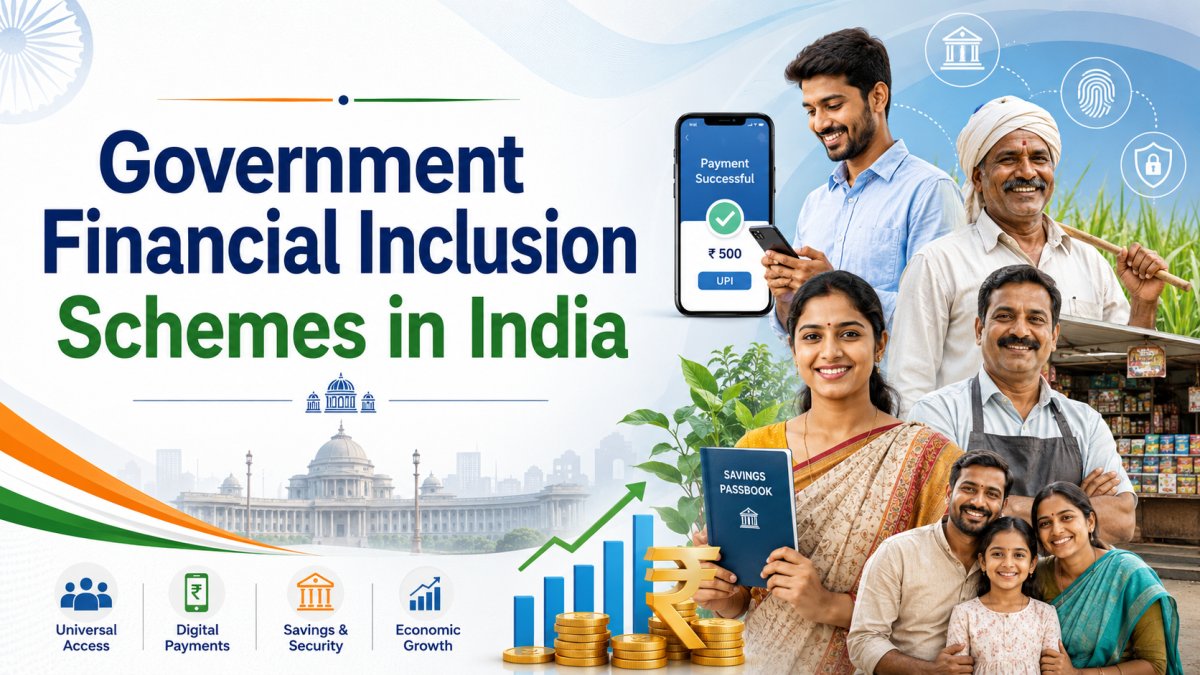
I still remember speaking to a local street vendor a few years back. He kept all his daily earnings stuffed in a small tin box. When I asked him why he didn't use a bank, his answer was heartbreaking: "Banks are for rich people, not for people like us who only have 50 rupees to save." This misconception kept millions out of the formal economy for decades.
Fast forward to 2026, and the landscape has completely transformed. Financial inclusion in India is no longer just a buzzword—it is a practical, functioning reality. The government has built an ecosystem where zero-balance banking, micro-insurance, guaranteed pensions, and small-business loans are available to everyone. Whether you are helping your domestic staff secure their future or planning to start a micro-business yourself, these schemes are absolute lifesavers.
Real-World Insight: A bank account doesn't just hold money; it builds a financial identity. It allows Direct Benefit Transfers (DBT) to reach people without corrupt middlemen and establishes a credit trail for future loans.
Top Government Financial Inclusion Schemes in 2026
1. Pradhan Mantri Jan Dhan Yojana (PMJDY) – The Gateway to Banking
The PMJDY scheme changed the rules of banking by removing the fear of "minimum balance penalties." It provides a Basic Savings Bank Deposit (BSBD) account with absolutely zero balance requirements. What makes it powerful in 2026 is that every account holder gets a free RuPay debit card, which includes an in-built accidental insurance cover of ₹2 Lakh. Furthermore, if you operate the account responsibly for six months, you unlock an Overdraft (OD) limit of ₹10,000—acting as an instant emergency loan.
- Target Audience: First-time bank users, low-income families, and daily wage earners.
- The Big Win: Instant access to UPI, zero maintenance charges, and direct welfare subsidies.
- External Link: Verify guidelines at the PMJDY Official Portal.
2. Atal Pension Yojana (APY) – Securing Your Golden Years
Retirement planning is usually reserved for the salaried class, leaving unorganized sector workers vulnerable. The Atal Pension Yojana fixes this. By contributing a very small amount monthly (depending on your entry age between 18 and 40), the government guarantees a fixed monthly pension ranging from ₹1,000 to ₹5,000 after the age of 60. The best part? In case of the subscriber's demise, the spouse continues to receive the exact same pension.
- Target Audience: Delivery partners, domestic workers, shop assistants, and freelancers.
- The Big Win: A sovereign guarantee means your pension will never default, regardless of stock market crashes.
- Internal Link: Read our full guide on how small monthly investments compound over time.
3. PMJJBY & PMSBY – Micro-Insurance for Maximum Safety
A single medical emergency or accident can push a family into generational debt. To prevent this, the government offers two highly subsidized insurance plans:
- PM Jeevan Jyoti Bima Yojana (PMJJBY): Provides ₹2 Lakh in life insurance (covering death for any reason) for individuals aged 18-50. The premium? Roughly ₹436 per year.
- PM Suraksha Bima Yojana (PMSBY): Offers ₹2 Lakh in accidental death and disability coverage for ages 18-70. The premium is unbelievably low at just ₹20 per year.
4. PM MUDRA Yojana – Fueling Small Business Dreams
If you want to start a tailoring shop, buy a commercial vehicle, or expand a small bakery, getting a traditional bank loan without collateral is nearly impossible. PM MUDRA Yojana offers collateral-free loans to non-farm micro and small enterprises. Loans are divided into three tiers: Shishu (up to ₹50,000), Kishore (up to ₹5 Lakh), and Tarun (up to ₹10 Lakh).
Quick Comparison: Scheme Matrix
| Scheme Name | Main Benefit | Age Limit | Annual Cost |
|---|---|---|---|
| Jan Dhan (PMJDY) | Zero Balance Account & ₹10k Overdraft | 10+ Years | ₹0 (Free) |
| Atal Pension (APY) | ₹1k to ₹5k Guaranteed Lifetime Pension | 18 - 40 Years | Varies based on age |
| PMJJBY (Life) | ₹2 Lakh Life Risk Cover | 18 - 50 Years | ~₹436 |
| PMSBY (Accident) | ₹2 Lakh Accidental Cover | 18 - 70 Years | ~₹20 |
How to Apply: The Real-World Guide
You don't need expensive consultants to enroll in these schemes. Here is the safest, most effective way to get started:
- Sync Your Documents: First, ensure your Name and Date of Birth exactly match across your Aadhaar Card, PAN Card, and Mobile Number registry. Mismatched details cause 90% of application rejections.
- Visit a Bank Mitra or Branch: Go to the nearest Public Sector Bank (like SBI, PNB) or a verified 'Bank Mitra' (Business Correspondent). You can open a PMJDY account in a single visit with e-KYC.
- Setup Auto-Debit: For APY, PMJJBY, and PMSBY, tell the bank clerk to link them to your savings account. The premiums will be auto-deducted annually (usually in May). Tip: Always keep an extra ₹500 in your account during May so your insurance doesn't bounce!
Crucial Safety Warnings for Beginners
- No Upfront Fees for MUDRA: Beware of fake agents on WhatsApp or Facebook demanding a "processing fee" to approve MUDRA loans. MUDRA loans are sanctioned by banks based on your business plan, not via Telegram brokers.
- The Nominee Rule: Never leave the 'Nominee' column blank. If something happens to you, your family should not have to fight legal battles to claim the ₹2 Lakh insurance money.
- Keep It Active: Do not let your Jan Dhan account freeze. Buy milk via UPI or deposit ₹100 every few months to keep the account operational.
By spending just under ₹500 a year, you or your employees can secure life insurance, accident coverage, and a guaranteed pension. This isn't just banking—it is building a bulletproof financial safety net for the families who need it most.

My main purpose in writing these posts is simply to help you. All the information shared here is carefully put together just to be useful for your daily needs. I always try my absolute best to provide the right guidance and support you as much as possible.






Comments (0)